When you finally decide to take that long-awaited vacation to to Rio de Janeiro, you will most likely be considering the sea shores, the Carnival, and even the Christ the Redeemer Statue. Be that as it may, the whole city of Rio de Janeiro is far beyond dazzling perspectives and stunning sea shores. This city used to be the capital of Brazil until 1960 and that means so many important events occurred in this part of the nation.Here we discover some of the Most Historical Monuments in Rio de Janeiro which are very popular among the visitors of Rio de Janeiro and You must consider to have a look of these amazing sites.
1.São Bento
The Abbey of Our Lady of Montserrat (Portuguese: Abadia de Nossa Senhora do Monserrate), all the more normally known as the Mosteiro de São Bento (Monastery of St. Benedict), is a Benedictine monastery situated on the Morro de São Bento (St. Benedict Hill) in midtown Rio de Janeiro, Brazil. The Mannerist style church is an essential example of Portuguese colonial architecture in Rio and the country.The abbey was established by Benedictine monks who came from the province of Bahia in 1590.
2. Sugar Loaf Mountain and Urca Hill
Sugar Loaf Mountain and Urca Hill are two Historical places in Rio de Janeiro and they are likewise remembered as the most mainstream attractions. The wonderful city of Rio de Janeiro turns out to be at the lower part of Sugar Loaf Mountain and changes have been made throughout the years to keep the city secured. There are twelve fortresses around Sugar Loaf Mountain, and they were designed to protect the most extravagant Portuguese settlement from an earlier time.
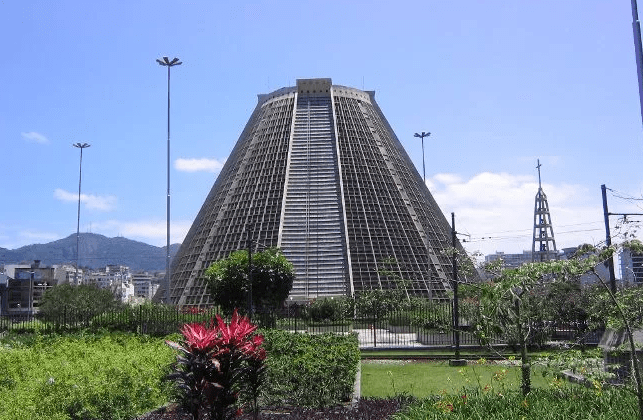
3. Metropolitan Cathedral of Saint Sebastian, Rio de Janeiro
The seat of a Roman Catholic archdiocese, The Metropolitan Cathedral of Saint Sebastian flaunts a commended present day configuration enlivened by Mayan pyramids. Committed to the city’s benefactor holy person, the church building highlights four long segments of bright stained glass windows, spreading over 64 m (210 ft) from the floor to the enlightened cross on the ceiling. The structure’s development began during the 1960s and required 15 years to finish.
 Live for travel fun